🏥 Introduction
Healthcare in the United States is among the most advanced in the world—but it also comes with extremely high costs. If you don’t have health insurance, paying for surgery can be financially overwhelming.
In this 2026 guide, we break down the real cost of surgery in the USA without insurance, including common procedures, hidden charges, and practical ways to reduce your expenses.
💡 Why Surgery Costs Are So High in the USA
Several factors contribute to high surgical costs:
- Expensive hospital infrastructure
- Highly trained medical professionals
- Advanced medical technology
- Administrative and operational costs
- Lack of price regulation compared to other countries
Because of this, patients without insurance often pay the full billed amount, which is significantly higher than negotiated insurance rates.
💰 Average Surgery Costs Without Insurance (2026)
Here’s a general estimate of common surgeries in the U.S.:
| Surgery Type | Average Cost (Without Insurance) |
|---|---|
| Appendectomy | $15,000 – $35,000 |
| Knee Replacement | $30,000 – $60,000 |
| Heart Bypass Surgery | $70,000 – $200,000 |
| C-Section Delivery | $15,000 – $30,000 |
| Gallbladder Removal | $20,000 – $40,000 |
| Hernia Repair | $10,000 – $25,000 |
| Cataract Surgery | $3,000 – $6,000 (per eye) |
👉 These prices vary depending on location, hospital, and complications.
🧾 Detailed Cost Breakdown
When you get a surgery bill, you’re not just paying for the operation itself.
🏨 1. Hospital Fees
- Room charges (ICU or standard room)
- Equipment usage
- Nursing care
💰 Cost: $1,000 – $10,000+ per day
👨⚕️ 2. Surgeon Fees
- The primary doctor performing surgery
- Based on expertise and complexity
💰 Cost: $3,000 – $50,000
💉 3. Anesthesia Charges
- Administered by anesthesiologist
💰 Cost: $1,000 – $10,000
🧪 4. Pre- and Post-Operative Care
- Lab tests
- Imaging (X-ray, MRI)
- Follow-up visits
💰 Cost: $500 – $5,000
💊 5. Medication Costs
- Pain relief
- Antibiotics
- Recovery drugs
💰 Cost: $100 – $2,000
⚠️ Hidden Costs You Should Know
Many patients are surprised by additional charges such as:
- Emergency room admission fees
- Specialist consultations
- Medical supplies
- Out-of-network provider fees
- Extended hospital stays
👉 These can increase your total bill by 20%–50% or more.
📍 Cost Differences by Location
Surgery costs vary widely across the U.S.:
| Location | Cost Level |
|---|---|
| California / New York | Very High |
| Texas / Florida | Moderate |
| Midwest States | Lower |
Urban hospitals tend to charge significantly more than rural or smaller facilities.
🏥 Hospital vs Outpatient Surgery Centers
Hospital Surgery
- More expensive
- Better for complex procedures
Outpatient (Ambulatory) Centers
- 30%–60% cheaper
- Suitable for minor surgeries
👉 Choosing the right facility can save thousands of dollars.
💡 How to Reduce Surgery Costs Without Insurance
Here are practical ways to save money:
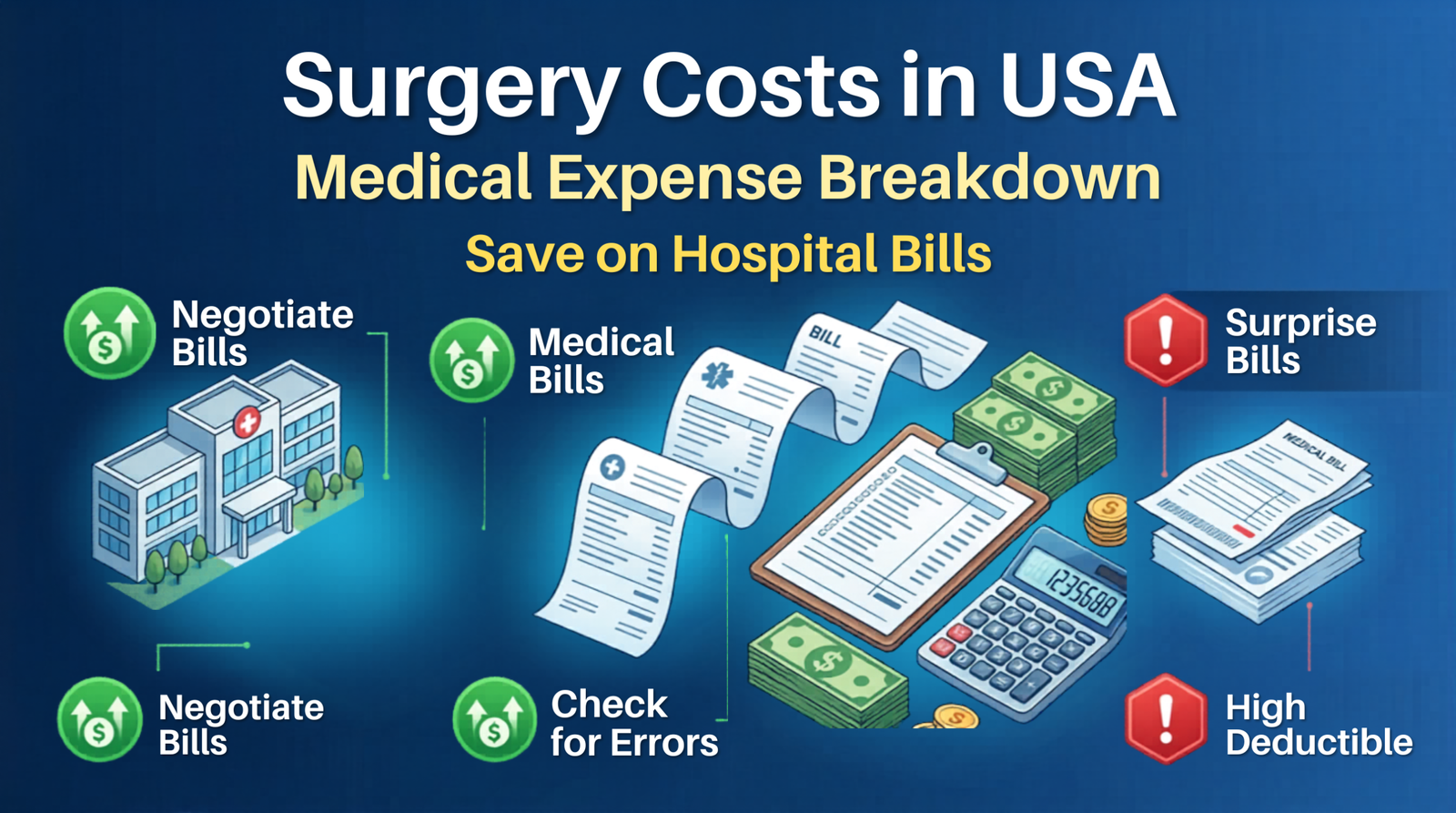
✅ 1. Negotiate the Price
Hospitals often have flexibility in pricing.
- Ask for a cash discount
- Request an itemized bill
- Negotiate before the procedure
👉 You can save 20%–50% just by negotiating.
✅ 2. Ask for Self-Pay Discounts
Many hospitals offer reduced rates for uninsured patients.
✅ 3. Use Medical Tourism
Some people travel abroad for affordable surgeries:
| Country | Savings |
|---|---|
| India | 60%–80% cheaper |
| Mexico | 50%–70% cheaper |
| Thailand | 50%–75% cheaper |
👉 Even with travel costs, total expenses can be much lower.
✅ 4. Choose Generic or Alternative Procedures
In some cases, less expensive treatment options may be available.
✅ 5. Look for Charity Care Programs
Nonprofit hospitals often provide:
- Free care
- Sliding-scale pricing
- Financial assistance programs
✅ 6. Payment Plans
Many hospitals allow monthly payment options with low or no interest.
✅ 7. Consider Short-Term Insurance
Temporary health insurance can cover certain procedures and reduce costs.
📊 With Insurance vs Without Insurance
| Category | With Insurance | Without Insurance |
|---|---|---|
| Appendectomy | $2,000 – $5,000 | $15,000 – $35,000 |
| Knee Replacement | $5,000 – $10,000 | $30,000 – $60,000 |
| C-Section | $3,000 – $7,000 | $15,000 – $30,000 |
👉 Insurance can reduce costs by 70%–90%.
🧠 When Should You Consider Insurance?
Even if you’re healthy, insurance is important if:
- You may need surgery in the future
- You want protection from emergency costs
- You prefer predictable healthcare expenses
🔮 Trends in Surgery Costs (2026)
- Increasing use of robotic surgery (higher cost but precision)
- Growth in outpatient procedures
- More transparent pricing tools
- Rise of teleconsultation before surgery
❗ Common Mistakes to Avoid
- Not asking for cost estimates in advance
- Ignoring hospital billing errors
- Choosing expensive hospitals without comparison
- Skipping financial assistance options
🏁 Conclusion
Surgery in the USA without insurance can be extremely expensive, but understanding the cost structure and available options can help you save a significant amount of money.
By comparing hospitals, negotiating prices, and exploring alternative solutions, you can reduce your financial burden and still receive quality care.
👉 Always plan ahead and explore every option before undergoing surgery.